How to Choose a Metal Detector for Beginners
Choose a metal detector by matching its controls, search modes, coil and water limits to where you’ll hunt and what you hope to find. Set a budget, then compare only models that fit those needs.
On this page (8 sections)
- How do you choose a metal detector for beginners?
- What features matter most when you choose a metal detector?
- Should you choose a waterproof metal detector?
- How to choose a metal detector coil size
- What should you spend on your first metal detector?
- Which beginner metal detector fits your plans?
- What should you check before buying your first detector?
- How do you choose a metal detector you’ll keep using?
To choose a metal detector, match its controls, search modes, coil and water limits to where you’ll hunt and what you hope to find. Start with your search area and budget, then compare models that suit those needs.
A beginner doesn't need every feature. Clear controls, a manageable weight and a few useful modes can matter more than a long feature list.
We compared the features of four detectors to show how different setups fit different plans.
If you’re still deciding whether the hobby suits you, read what metal detecting as a hobby really costs. For a broader first-purchase overview, see our metal detectors for adults guide.
How do you choose a metal detector for beginners?
Choose a detector by deciding what you want to find and where you’ll search, then match its features to those plans. Your first detector should fit your likely use.
Use these questions to narrow your options:
- Where will you search? Parks and fields call for different water protection than wet beaches or shallow water.
- What do you hope to find? Coins, jewelry and relics may call for useful target identification or discrimination controls.
- How much complexity do you want? A few clear modes may be easier to learn than many adjustments.
- How will you carry it? Check the weight, shaft adjustment and storage length.
- What comes with it? A backpack, headphones or shovel may be useful if you don't already own them.
These questions help you compare features in context. A detector is a better fit when its features solve a problem you expect to face.
What features matter most when you choose a metal detector?
For most beginners, focus first on controls, search modes, target information, comfort and coil coverage. These features affect how you set up, read signals and carry the detector.
How to choose a metal detector with beginner-friendly controls
A beginner-friendly detector has controls you can understand and use in the places you plan to search. Look for clear mode labels, straightforward adjustments and a display or tones that make sense to you.
Some detectors use analog controls, while others show numerical target information. A display can add useful context before you dig, but it doesn't identify every target with certainty.
Treat target IDs as a clue, then decide whether to investigate based on the signal and your search goals.
If you want a clear first-hunt routine after you choose, our guide to how to use a metal detector covers the basics.
Which search modes should you look for?
Pick modes that match the targets and places you expect to search. All-metal modes let you search for a broad range of metal targets, while discrimination modes help filter selected target types.
Mode names vary by model, so check what each mode does before you buy. The Minelab X-Terra Voyager has All Metal, Custom, Jewelry and Learn modes.
The Bounty Hunter TK4 offers all-metal, tone and discrimination modes. That gives you a different control setup to compare with the Minelab X-Terra Voyager.
More modes don't automatically make a detector better for you. A smaller set of modes that you understand may be easier to learn and use consistently.
How much do target ID and discrimination help?
Target ID and discrimination can help you decide which signals deserve attention, but they can't promise what you'll uncover. Target ID gives you a clue about a signal, while discrimination lets you filter some unwanted targets.
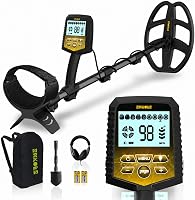
The Minelab X-Terra Voyager uses large numerical Target IDs and has 7 discrimination segments. The SAKOBS 11-inch foldable detector has a backlit LCD Target ID display and DISC filtering.
These controls give you information to consider before digging. They don't confirm that a buried object is a coin, ring or other wanted find.
How important are weight and adjustability?
Weight and adjustability matter because you'll carry the detector while sweeping it across the ground. Compare its weight and shaft adjustment, and think about how long you expect to hunt.
The examples in this guide range from 2.6 lb to about 2.8 lb. The Minelab Vanquish 360 weighs 2.6 lb, while the Minelab X-Terra Voyager weighs 2.8 lb.
The SAKOBS 11-inch foldable detector weighs 2.7 lb and adjusts from 26 to 47 inches. Compare that range with your height and how you expect to hold the detector.
For transport, the Minelab X-Terra Voyager collapses to 28.3 inches. Its included backpack also gives you a way to carry the kit between search areas.
Should you choose a waterproof metal detector?
Choose water protection that matches your planned hunts, and check which parts can go underwater. A waterproof coil alone does not mean the control box can be submerged.
The Bounty Hunter TK4 has an 8-inch waterproof coil. The Minelab X-Terra Voyager has an 11-inch waterproof coil.
Keep full-detector submersion separate from coil protection when comparing these models. For either detector, confirm the control box's water limits before taking it into water.
The SAKOBS 11-inch foldable detector has an 11-inch IP68 waterproof DD coil. Don't extend that coil rating to the rest of the detector.
Minelab rates the Minelab Vanquish 360 as fully waterproof to IP68 and submersible up to 16 ft. Follow the manufacturer's instructions for underwater use.
For more detail on water ratings, read what waterproof means on a metal detector. If beach hunting is your main goal, our beginner beach metal detecting tips can help you plan your first outing.
How to choose a metal detector coil size
Choose a coil size by weighing ground coverage against access to tight spaces. A larger coil covers a wider sweep, while a smaller coil can be easier to move around obstacles.
The four examples here have coils from 8 to 11 inches. The Bounty Hunter TK4 has an 8-inch waterproof coil.
The Minelab X-Terra Voyager and SAKOBS 11-inch foldable detector each have an 11-inch coil. The Minelab Vanquish 360 includes a 10 x 7-inch Double-D coil.
Coil size is only one part of the decision. Consider the detector's weight, controls and water limits alongside it.
A larger coil doesn't establish how deep a detector will find your target. Avoid choosing by coil width alone when your main need is portability or full-detector water protection.
What should you spend on your first metal detector?
Set a budget based on how often you expect to hunt and which features you need. A detector that fits your first few outings is often a sensible place to start.
Compare the full setup, including accessories you would otherwise buy separately. Headphones, a shovel or a backpack may affect which kit fits your budget.
The Minelab X-Terra Voyager and SAKOBS 11-inch foldable detector both include those accessories. Compare their controls, coil protection and portability before choosing between them.
Also consider whether the search modes fit the locations you can reach regularly. Features for a type of hunt you rarely plan to try may matter less than weight or clear controls.
For a closer look at budget choices, see our best metal detectors under 200 dollars and best metal detectors under 300 dollars. For a general cost discussion, read how much a good metal detector costs.
Which beginner metal detector fits your plans?
Choose by the feature that solves your main search or carrying need. These examples show different ways to match a detector to your plans.
Bounty Hunter TK4: a simple set of modes
The Bounty Hunter TK4 suits someone who wants analog controls and 3 search modes. It has all-metal, tone and discrimination modes, adjustable sensitivity and an 8-inch waterproof coil.
This is a reasonable match if you expect to search parks, yards or damp ground and want a straightforward control layout. Keep the control box out of water unless the manufacturer's instructions allow otherwise.
Minelab X-Terra Voyager: target IDs and a kit
The Minelab X-Terra Voyager suits a beginner who wants numerical Target IDs and an included kit. It comes with headphones, a collapsible shovel and a backpack.
Its 11-inch waterproof coil and adjustable shaft suit plans that include parks, fields and beaches. It weighs 2.8 lb and collapses to 28.3 inches for transport.
SAKOBS 11-inch foldable detector: portability and coil protection
The SAKOBS 11-inch foldable detector suits a beginner who values a foldable setup and waterproof coil. It has an 11-inch IP68 DD coil, a backlit LCD Target ID display and 4 search modes.
It weighs 2.7 lb and adjusts from 26 to 47 inches. Its All Metal, Disc, Jewelry and Pinpointer modes give you options for searching and narrowing a target's location.
The kit includes headphones, a digging shovel and a carrying backpack. Confirm the water limits for the rest of the detector before submerging any part beyond the coil.
Minelab Vanquish 360: full-detector water protection
The Minelab Vanquish 360 suits a beginner who needs full-detector water protection. It weighs 2.6 lb and has Park, Beach and All Metal modes.
Minelab rates it for submersion up to 16 ft. Its Multi-IQ technology requires no manual frequency switching.
The built-in lithium-ion rechargeable battery provides up to 10 hours of continuous run time. The included waterproof V10X coil measures 10 x 7 inches and uses a Double-D design.
What should you check before buying your first detector?
Check the control layout, included coil, water limits, weight, shaft adjustment and accessories. These details help prevent mismatches between your plan and your gear.
Use this short checklist before you decide:
- Search area: dry park, field, beach, wet sand or shallow water.
- Target: coins, jewelry, relics or a broad mix.
- Controls: modes and adjustments you can learn.
- Comfort: weight, shaft adjustment and storage length.
- Water protection: coil rating versus full-detector rating.
- Kit: headphones, shovel, backpack or other useful items already included.
A beginner choosing a metal detector should make the decision from those needs, then learn the controls before the first hunt. For a practical first outing plan, read how to start metal detecting.
How do you choose a metal detector you’ll keep using?
Choose the detector whose controls and water limits fit your regular hunts. Pick the Bounty Hunter TK4 for analog controls or the Minelab X-Terra Voyager for numerical IDs and an accessory kit.
Choose the SAKOBS 11-inch foldable detector for its foldable design and included backpack. Choose the Minelab Vanquish 360 when full-detector submersion is part of your plan.
Learn its controls and water limits before your first outing. Our metal detecting as a hobby guide can help you plan what comes after the purchase.
Frequently asked questions
What should a beginner look for in a metal detector?
Look for clear controls, search modes that match your targets, a comfortable setup and a coil suited to your search area. Check which parts can go underwater, since a waterproof coil does not mean the full detector is submersible, and choose features you expect to use.
Is a more expensive metal detector easier to use?
Price alone doesn't tell you whether a detector will feel simple, so compare its controls and search modes with what you want to learn. A model with several options can be useful if you understand when to use them, but consider its weight and shaft adjustment too.
Do beginners need a waterproof metal detector?
Beginners need water protection that matches their search area, rather than full submersion capability for every hunt. For dry parks and fields, focus on controls and comfort; for wet sand or shallow water, check the exact water limits because a waterproof coil and a fully submersible detector are different things.
What coil size should a beginner choose?
Start with a coil size that suits the places you plan to search and the detector's intended use. The examples here range from an 8-inch coil to an 11-inch coil, but compare weight and controls too, since coil size alone doesn't decide whether a model fits you.