Beach Metal Detecting Tips for Beginners
Start beach metal detecting at a permitted spot, learn your detector on dry sand, and use a slow, even sweep. Check local rules before you dig, and keep the control unit out of water unless its manual allows submersion.
On this page (8 sections)
- Where can you metal detect on a beach?
- What should beginners bring to the beach?
- How do you set up a metal detector for beach sand?
- How should you sweep the coil over sand?
- How do you recover a beach target neatly?
- What should you do around surf and shallow water?
- Which beach metal detecting mistakes should beginners avoid?
- How do you choose your next step?
The most useful beach metal detecting tips for beginners are to choose a permitted beach, learn your detector on dry sand, and make a slow, even sweep. Check local rules before digging, and keep each hole small and filled when you're done.
You don't need to cover the whole beach in one visit. A short search in a clear, permitted area gives you time to learn the signals and how your detector responds to sand.
Where can you metal detect on a beach?
You can metal detect where the land authority allows detecting and digging, so check with the beach manager before you bring a detector. Rules can differ between public beaches, parks, protected areas, and private property.
Stay away from dunes, marked wildlife areas, and restricted zones. If the rules do not explain whether digging is allowed, ask before you start.
The waterproof beach detector guide explains what waterproof ratings mean and which parts of a detector to check.
What should beginners bring to the beach?
Bring your detector, a way to recover targets, and a container for trash you dig up. Pack water and sun protection, and check the weather and tide conditions before choosing when to go.
Start on dry sand where you can practice without standing in water. If you plan to search wet sand or shallow water, first read your detector's manual and stay within its stated water limits.
The Minelab X-Terra PRO has a control pod flashlight, a red backlight display, and a backlit keypad, which can help when you search in lower light. The full detector is IP68 waterproof to 16 ft, though that equipment limit does not establish safe conditions for entering water.
How do you set up a metal detector for beach sand?
Use a Beach mode if your detector has one, then begin with the standard settings for that mode. Make one change at a time if you need to adjust the detector, so you can hear how each change affects the signals.
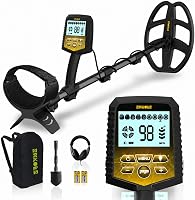
The SAKOBS 11-inch foldable detector has an IP68 waterproof coil, 4 search modes, and a backlit LCD target ID display. Its modes are All Metal, Disc, Jewelry, and Pinpointer, so it does not have a dedicated Beach mode.
Don't assume a waterproof coil means the control unit can go underwater. Check the manual for the water limit of each part before you search near the surf.
How should you sweep the coil over sand?
Sweep the coil slowly from side to side, keeping it close to the sand and level through each pass. Move forward by a small step after each sweep, with the next pass slightly overlapping the last.
Keep the coil moving at a steady pace. If you swing too fast or lift the coil at the ends of each pass, you can miss signals or make it harder to tell where a target is.
Practice on dry sand until the sound and target display feel familiar.
The Minelab X-Terra Voyager offers 4 search modes: All Metal, Custom, Jewelry, and Learn. Its 11-inch coil is waterproof, and the detector includes a pinpoint mode for narrowing a target's location.
For more practice with a detector's controls and sweep, see how to use a metal detector.
How do you recover a beach target neatly?
Use pinpoint mode to narrow the signal before you dig, then remove only enough sand to find the target. Follow the beach's rules for digging, and fill the hole completely before moving on.
A handheld pinpointer can help you find a target once you've opened a small hole. The SAKOBS pinpointer has 360-degree side scanning, audio and vibration alerts, and an IP68 waterproof design for wet sand and shallow water use.
Put any trash you recover in your container rather than leaving it in the sand. For a broader overview of detector features and water limits, read what waterproof means on a metal detector.
What should you do around surf and shallow water?
Keep to permitted, stable ground and check local water warnings before searching near surf. Follow closures and lifeguard instructions, and don't enter moving water to follow a signal.
A detector's waterproof rating describes the equipment, not whether the water is safe to enter. Check the manual for which parts can be submerged and their depth limits before searching in wet sand or water.
Which beach metal detecting mistakes should beginners avoid?
The most common beginner mistakes are searching before checking local rules, swinging too quickly, and digging before narrowing a signal. Slow down, learn your detector's settings for beach use, and recover targets with small holes.
Avoid assuming every signal marks a valuable find. Digging neatly and removing trash are part of a responsible search, even when the target is not something you want to keep.
How do you choose your next step?
Put these beach metal detecting tips into practice on permitted dry sand while you learn the controls, and consider wet sand only after checking your detector's water limits. To choose a detector for more time near the surf, compare the options in our best metal detectors for the beach guide.
Frequently asked questions
What is the best place to metal detect on a beach?
Start on dry sand at a beach where detecting and digging are allowed, away from crowded areas, dunes, marked wildlife areas, and posted restrictions. Check local rules before you go, and ask the beach manager if you cannot confirm where you may search and dig.
Can you use a metal detector in wet sand?
You can search wet sand when your detector's manual allows it, using a Beach mode if your detector has one and adjusting settings gradually. Wet sand can behave differently from dry sand, so keep the control unit and coil within their stated water limits as you search.
How deep should I dig when beach detecting?
Dig only as deep as needed to recover the target, following local rules for hole size and using pinpoint mode or a handheld pinpointer to narrow its location first. Fill the hole completely and smooth the sand when you finish, even if you find only trash.
Do I need a waterproof metal detector for the beach?
For dry sand, full waterproofing isn't essential, but wet sand and shallow water require checking which parts can get wet and their depth limits. A waterproof coil does not establish that the control unit can be submerged, so read the manual before searching near the surf.